Emergency line open 24/7 · Times shown in ET
Emergency HVAC checklist: what to do first
Not every HVAC failure is an emergency, and a few situations are emergencies that have nothing to do with calling a heating contractor. This is the order to work through.
Your call connects you with an independent local HVAC provider. No obligation.
Call (855) 321-3194Is this an emergency or can it wait?
Leave the building and call 911 for a gas smell or a sounding carbon monoxide alarm. Shut the breaker for smoke or an electrical smell. For everything else, set the thermostat to off and call (855) 321-3194.
What you are seeing
Leave and call 911 first
- You smell gas anywhere in the building
- A carbon monoxide alarm is sounding
- Smoke or sparking at the equipment
- Visible flame outside the burner compartment
Call a provider urgently
- No cooling during a heat advisory
- No heat below freezing
- Water reaching electrical components
- A breaker tripping on every cycle
Do and do not
| Do | Do not |
|---|---|
| Leave the building before calling about a gas smell | Operate light switches on your way out |
| Call 911 from outside for a sounding CO alarm | Go back inside to find the source |
| Shut the breaker for smoke or an electrical smell | Try to extinguish an equipment fire yourself |
| Set the thermostat to off for a non-urgent fault | Keep running equipment that smells or sparks |
| Move vulnerable people somewhere safe in extreme weather | Heat a room with a gas range or outdoor appliance |
What causes it, ranked by how often
- Gas leak. Leave immediately and call the gas utility or 911 from outside. Do not operate switches, thermostats or phones inside the building.
- Carbon monoxide. Colourless and odourless, with early symptoms that resemble flu. A sounding alarm means leaving and calling 911, not investigating.
- Electrical fault or fire risk. Smoke, sparking or a burning plastic smell. Shut the breaker feeding the equipment if you can do so safely, then call.
- Extreme temperature exposure. No cooling in a heat advisory or no heat below freezing is a health matter for anyone vulnerable, and it moves up the queue accordingly.
- Water damage risk. Condensate reaching electrics or soaking into a ceiling. Switching the system off stops more water forming.
- Freeze risk to pipework. A heating failure in deep cold threatens burst pipes, which cause far more damage than the original fault.
How a technician diagnoses it
- Rule out life safety first
Gas, carbon monoxide and fire come before any question about the equipment itself.
- Make the equipment safe
Thermostat off, and the breaker off where there is any electrical concern.
- Assess exposure risk
Who is in the building, how extreme the weather is, and whether anyone needs to be somewhere else.
- Then call for service
With the ZIP code, the system type and a clear description of what the equipment was doing.
When to shut the system off
- Gas smell: leave the building, call the gas utility or 911 from outside.
- Carbon monoxide alarm sounding: leave and call 911.
- Smoke or sparking: shut the breaker if safe, then call.
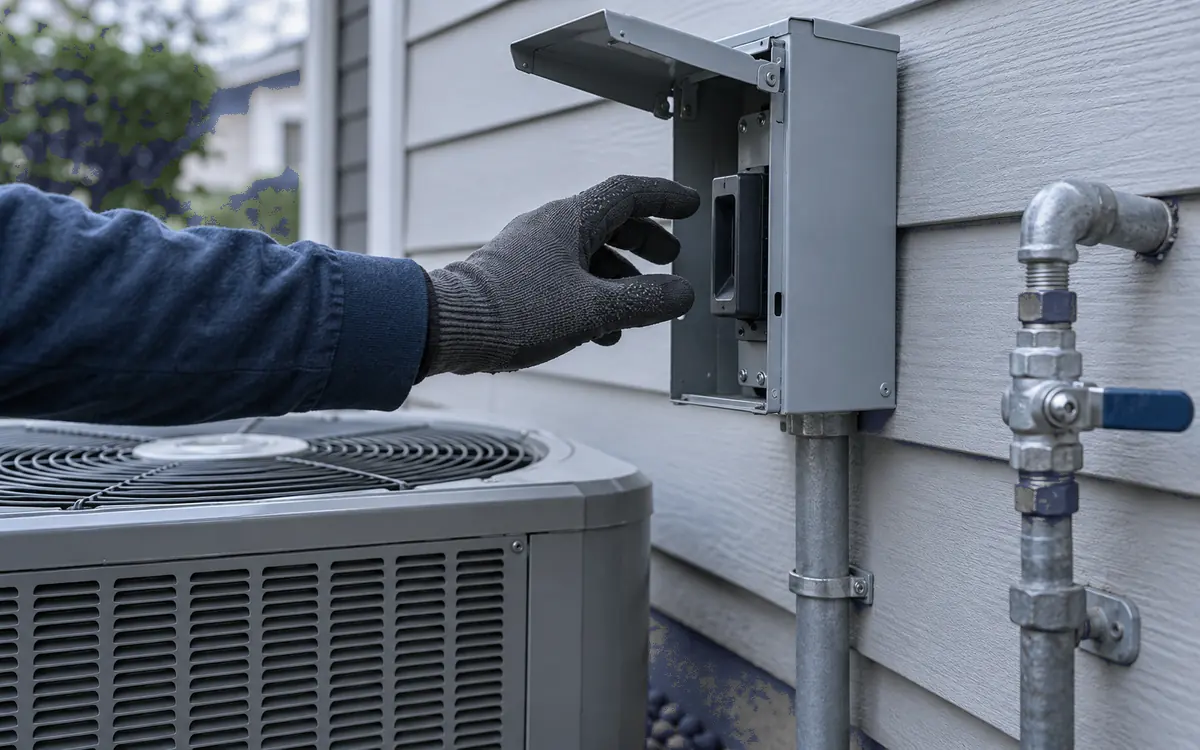
- Water at electrical components: switch the system off at the breaker.
Service pages
Related guides
Safety first
Call now, or call the utility first?
Call now
- No cool air during a heat advisory
- No heat with outdoor temperatures below freezing
- Burning smell from the vents
- Water pooling at the air handler
- Ice on the line set
- Breaker tripping on every cycle
Call (855) 321-3194 and give your ZIP code.
Shut it off and call the utility or 911 first
- You smell gas: leave the building, then call the gas utility or 911
- Smoke or sparking at the equipment
- A carbon monoxide alarm is sounding: leave and call 911
Reference: CPSC recalls and US Fire Administration heating fire safety.
Questions
Emergency HVAC checklist questions
What counts as an HVAC emergency?
A gas smell, a sounding carbon monoxide alarm, or smoke and sparking are emergencies for the fire service or the gas utility, not a contractor. No heat below freezing and no cooling in a heat advisory are urgent service calls.
Who do I call first if I smell gas?
Leave the building, then call the gas utility or 911 from outside. Do not operate light switches, thermostats or phones on the way out, and do not go back in until you are told it is safe.
What should I do if the CO alarm sounds?
Leave the building immediately with everyone in it and call 911 from outside. Carbon monoxide has no colour or smell, so the alarm is the only warning you get. Do not go back in to investigate.
Can a heating failure wait until morning?
Often yes, if the weather is mild and nobody in the house is vulnerable. It cannot wait if outdoor temperatures are below freezing and pipework is at risk, or if anyone in the home is frail.
Is the line really answered overnight?
The line is answered 24/7 in ET. Whether a provider can attend overnight depends on participation, technician availability and demand, which spikes during heat events and cold snaps.
What should I have ready when I call?
Your ZIP code, the type of system, and a short description of what it was doing before it stopped. Whether the breaker tripped, and any smell or noise, all help the provider bring the right parts.
Written and fact-checked by the HVAC Emergency USA editorial team. Last updated . Editorial policy.