
Emergency line open 24/7 · Times shown in ET
Duct cleaning and sealing for heating performance
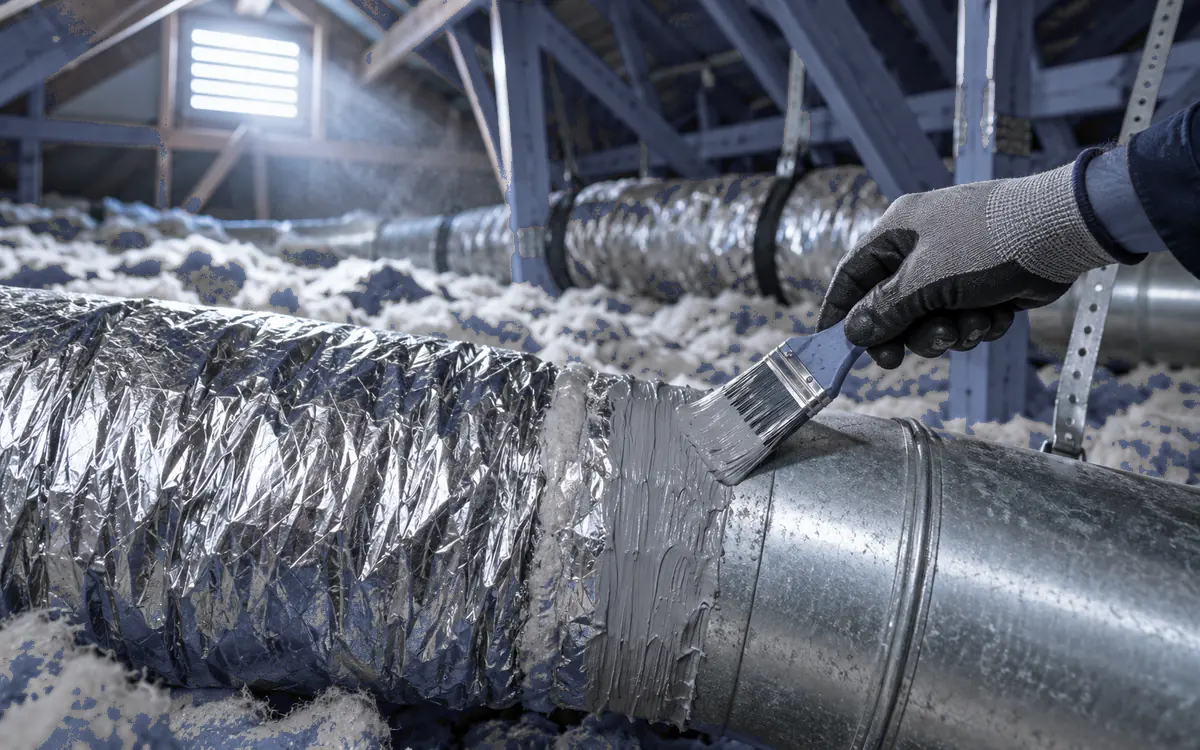
In winter the same leaks dump heated air into unconditioned space, and a run that has separated in a crawlspace shows up as one room that never gets warm no matter how long the furnace runs.
Your call connects you with an independent local HVAC provider. No obligation.
Call (855) 321-3194How much does duct cleaning and sealing cost and how fast can I get it?
Duct work runs a figure the provider confirms on site depending on access and the extent of the repair. Call (855) 321-3194 and an independent local provider inspects the runs and confirms their own price before any work starts.
Signs you need this service
- One room that stays cold whatever the thermostat says
- Dust settling quickly after cleaning
- Whistling or rushing noise at the returns
- Heating bills high for the floor area
- Crawlspace runs that feel warm from outside
- A disconnected boot under a floor register
Signs the ductwork is the problem
A heating system that satisfies the thermostat while one room stays cold is a distribution problem, not a capacity problem. These are the signs that point there.
Return air matters as much as supply
Most attention goes to the supply side because that is where the warm air comes from, but restricted or leaking return ductwork causes just as much trouble and is harder to spot. A return pulling air from a crawlspace or an attic draws in whatever is there, including dust, moisture and in the worst case combustion products from an appliance. It also starves the furnace of airflow, which trips the high limit and produces short heating cycles that never satisfy. If rooms are cold and the furnace keeps cutting out, ask the provider to check static pressure on both sides rather than only the supply.
Parts and failure points
| Part | What you notice |
|---|---|
| Flex duct | Crushed or disconnected runs |
| Mastic sealing | Leaking joints and seams |
| Boot | Loose connection at the register |
| Collar | Separated take-off at the plenum |
| Register | Damaged or undersized grille |
| Insulation sleeve | Sweating or heat loss on runs |
What the visit looks like
- Duct inspection
Access panels opened, duct condition assessed and any blockages or damage noted before work begins.
- Negative pressure setup
Collection unit attached to the main trunk. Negative pressure established so dislodged debris does not re-enter the space.
- Mechanical cleaning
Rotary brush or compressed air used through each branch run. Supply and return sides both addressed.
- Seal and close-out
Access panels resealed, register grilles replaced and airflow verified at the key outlets.
Repair or replace
Heating system decisions hinge on two risks that cooling systems don't share: a cracked heat exchanger and carbon-monoxide exposure. A confirmed crack is a replacement call regardless of system age, because patching a heat exchanger is not a code-accepted repair. Outside that scenario, age and the cost of the failed part guide the call the same way they do for cooling equipment.
Fuel costs also matter here. An older 80-AFUE furnace running against current gas rates may cost 20–25% more to operate than a 95-AFUE condensing unit. DOE Energy Saver heating and cooling covers efficiency ratings and seasonal operating cost comparisons if you want a baseline.
| Unit age | Minor fault | Major component or cracked exchanger |
|---|---|---|
| Under 10 years | Repair | Repair; verify heat exchanger integrity first |
| 10 to 16 years | Repair | Get a replacement quote; cracked exchanger = replace |
| 17 years or more | Repair as a bridge only | Replace: fuel savings offset replacement cost |
Safety panel
- Gas smell: leave the building, then call the gas utility or 911 from outside. Do not operate switches on your way out.
- Carbon monoxide alarm sounding: leave the building and call 911. Do not go back in to investigate.
- Electrical burning smell: shut off the breaker feeding the air handler and the condenser, then call.
- Refrigerant: handled only by technicians holding EPA Section 608 certification. Never vent or top up a system yourself.
Providers in this network work on equipment from Carrier, Trane, Lennox, Goodman, Rheem, York, American Standard, Bryant, Amana, Daikin, Mitsubishi Electric, Ruud. HVAC Emergency USA is an independent referral service and is not affiliated with, endorsed by or authorised by any equipment manufacturer.
The other angle
The same service written for cooling season: Duct Cleaning and Sealing, cooling vertical.
Coverage
Find this service in your city
By state
Other heating services
- AC Repair
- AC Installation and Replacement
- Furnace Repair
- Furnace Installation and Replacement
- Heat Pump Repair
- HVAC Maintenance and Tune-Up
- Thermostat Installation and Repair
- Boiler Repair
- Indoor Air Quality and Humidity
Related guides
Questions
Duct Cleaning and Sealing questions
How much does duct cleaning and sealing cost?
Typical completed jobs run a figure the provider confirms on site including parts and labor. A diagnostic visit is usually a figure the provider states up front. The provider confirms the exact figure on site before any work begins, and you approve it first.
How quickly can a provider attend?
The line is answered 24/7 in ET. Actual attendance depends on provider participation, your location, technician availability and demand that day. The operator tells you the window on offer rather than booking one nobody can meet.
Do you carry out the work yourselves?
No. HVAC Emergency USA is a referral service. We do not own trucks or employ technicians. We connect you with an independent local provider, and verifying their licence and insurance before work starts is your responsibility.
Do I have to be home for the visit?
Yes. The technician needs access to the thermostat and the equipment itself, and someone has to approve the quoted price before work begins. For combustion appliances they may also want to check alarms.
What should I do if I smell gas?
Leave the building first, then call the gas utility or 911 from outside. Do not operate light switches, thermostats or phones on your way out. Call us afterwards, once the property has been made safe.
What if the system is under warranty?
Parts warranties of five to ten years are common, labor warranties are not. Have the model and serial number ready so the provider can check coverage before fitting anything.
How do you choose the provider?
By ZIP code first, then by who is accepting calls. We publish no ratings and sell no placement. During a cold snap the set of available providers in a market narrows considerably.
Is there any charge for calling?
No. There is no charge to call and no obligation to proceed. We may be compensated by providers or partners when you call, which does not change what you are quoted or what you pay.
Written and fact-checked by the HVAC Emergency USA editorial team. Last updated . Editorial policy.