
Emergency line open 24/7 · Times shown in ET
HVAC making noise: what each sound means
Heating and cooling equipment makes a consistent set of noises when it is healthy. A new noise is worth identifying, because the sound itself usually names the component.
Your call connects you with an independent local HVAC provider. No obligation.
Call (855) 321-3194Is this an emergency or can it wait?
Match the sound to the part: grinding points at a motor bearing, squealing at a belt or bearing, banging at ductwork or delayed ignition, and a persistent hum at a capacitor or contactor. Call (855) 321-3194 and we connect you with a local provider.
What you are seeing
Mechanical noises
- Grinding from the air handler
- Squealing at start-up or throughout
- A hum with no start
- Rattling panels or screws
Combustion and duct noises
- A bang in the ductwork on start-up
- A whoosh or boom when the burner lights
- Clicking that repeats without a start
- A kettle-like rumble from a boiler
Do and do not
| Do | Do not |
|---|---|
| Note when in the cycle the noise happens | Ignore a grinding noise and keep running the system |
| Shut the system off if you hear grinding or screeching | Spray lubricant into a sealed motor |
| Record the sound on a phone for the technician | Remove panels while the system is running |
| Tighten obviously loose external panel screws | Open a gas appliance to investigate a boom |
| Shut the gas off and call if ignition bangs loudly | Keep running a furnace that booms on ignition |
What causes it, ranked by how often
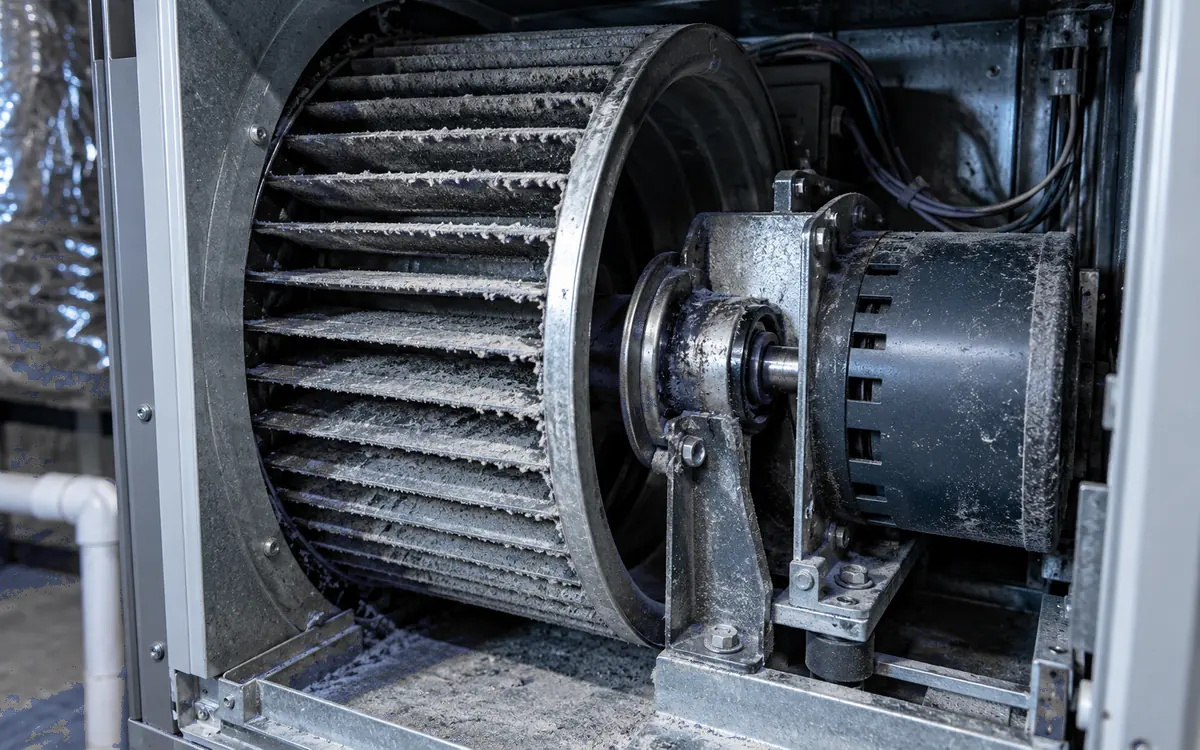
- Worn motor bearings. Grinding or screeching from the blower or condenser fan. The motor is on its way out, and running it to failure usually costs more than replacing it.
- Failing capacitor or contactor. A persistent hum with no start, or a rapid chattering from the outdoor unit. Inexpensive parts with loud symptoms.
- Duct expansion and contraction. A single bang as the system starts or stops, caused by sheet metal flexing under pressure change. Annoying rather than damaging.
- Delayed ignition. A whoosh or boom when a furnace lights, caused by gas accumulating before ignition. This one is a genuine safety concern and needs attention.
- Loose hardware or debris. Rattling panels, loose screws, or debris inside the condenser cabinet striking the fan.
- Boiler kettling. Scale or sludge restricting flow so water flashes to steam against the hottest surfaces. Stresses the most expensive component in the system.
How a technician diagnoses it
- Locate the source
Indoor air handler, outdoor condenser, ductwork or boiler. Each points at a different set of parts.
- Identify the point in the cycle
At start-up, throughout the run, or at shutdown. Timing separates electrical faults from mechanical ones.
- Inspect the moving parts
Blower wheel balance, bearing play, fan blade condition and any debris in the cabinet.
- Check combustion on a boom
Burner condition, gas pressure and ignition timing, since delayed ignition is a safety matter rather than a comfort one.
When to shut the system off
- Grinding or metal-on-metal screeching. Continuing to run it will destroy the motor.
- A loud boom or whoosh when a furnace ignites. That is delayed ignition and needs attention before further use.
- Any burning smell accompanying the noise.
- A boiler kettling loudly and continuously.
Quick read
| Urgency | Call today |
|---|---|
| Most likely | Worn motor bearings |
| Side | Cooling and heating |
Service pages
Related guides
Safety first
Call now, or call the utility first?
Call now
- No cool air during a heat advisory
- No heat with outdoor temperatures below freezing
- Burning smell from the vents
- Water pooling at the air handler
- Ice on the line set
- Breaker tripping on every cycle
Call (855) 321-3194 and give your ZIP code.
Shut it off and call the utility or 911 first
- You smell gas: leave the building, then call the gas utility or 911
- Smoke or sparking at the equipment
- A carbon monoxide alarm is sounding: leave and call 911
Reference: CPSC recalls and US Fire Administration heating fire safety.
Questions
HVAC making noise questions
What does grinding from my HVAC mean?
Almost always a motor bearing that has worn out, in either the indoor blower or the outdoor fan. Running the system after grinding starts usually ends in a seized motor, which costs more than replacing the bearing would have.
Is a banging noise in the ducts serious?
A single bang as the system starts or stops is usually sheet metal flexing under pressure change. It is noisy rather than harmful. Repeated banging, or banging combined with weak airflow, is worth investigating.
Why does my furnace boom when it lights?
That is delayed ignition: gas accumulates for a moment before igniting all at once. It can crack a heat exchanger over time and it should be looked at rather than tolerated, even though the furnace keeps working.
What is the humming noise from my outdoor unit?
A hum without the fan or compressor starting usually means a failed run capacitor. The motor is trying to start and cannot. It is an inexpensive part, but leaving it humming overheats the windings.
Why does my boiler sound like a kettle?
Scale or sludge is restricting flow so that water against the hottest surfaces flashes to steam and collapses. It indicates poor circulation and it shortens the life of the heat exchanger.
Can I ignore a squealing noise?
Not for long. Squealing usually precedes grinding, and grinding usually precedes a seized motor. Addressing it while it is still a noise is considerably cheaper than addressing it afterwards.
Written and fact-checked by the HVAC Emergency USA editorial team. Last updated . Editorial policy.