
Emergency line open 24/7 · Times shown in ET
Clogged condensate drain: the most common summer shutdown
More cooling systems stop in summer because of a blocked drain line than for any other single reason, and it is among the least costly problems on this site to prevent.
Your call connects you with an independent local HVAC provider. No obligation.
Call (855) 321-3194Is this an emergency or can it wait?
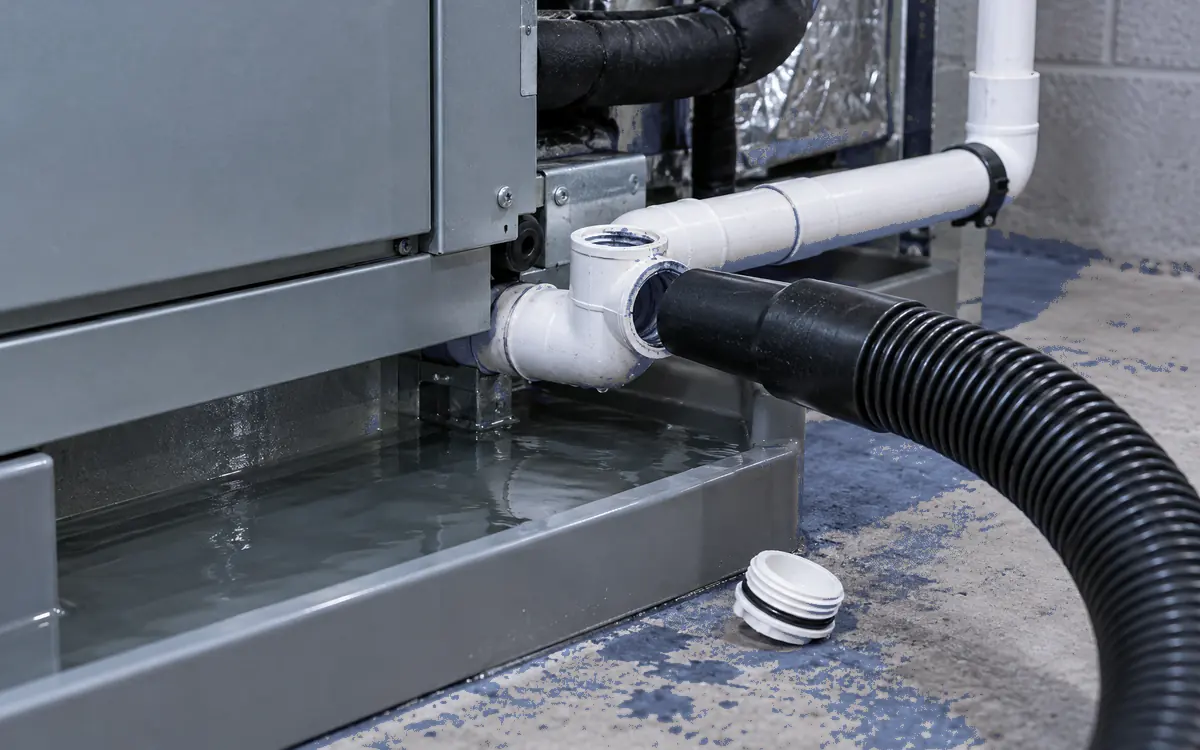
A blocked condensate drain fills the pan, trips the float switch and shuts the system off. Switch it off to stop more water forming, then call (855) 321-3194 and we connect you with a local provider who clears the line.
What you are seeing
What you notice first
- The system shut itself off with no obvious fault
- Standing water in the drain pan
- Water around the base of the air handler
- Gurgling from the drain line
Secondary signs
- A damp patch on a ceiling below an attic unit
- A musty smell when the blower runs
- The float switch has tripped
- No water coming from the outdoor drain termination
Do and do not
| Do | Do not |
|---|---|
| Switch the system off to stop more condensate forming | Keep resetting the float switch and carrying on |
| Check the outdoor drain termination for flow | Pour bleach or harsh chemicals into the line |
| Clear standing water away from electrics | Remove the float switch to bypass it |
| Ask about a cleanout fitting if there is none | Assume it will clear itself |
| Book annual maintenance to prevent recurrence | Ignore a musty smell from the vents |
What causes it, ranked by how often
- Biological growth in the line. The drain is dark, damp and slightly warm, which is ideal for algae and slime. Over a season it narrows and then blocks the line entirely.
- Dust and debris bonding with moisture. Fine dust that gets past the filter settles in the pan and binds into a sludge that blocks the drain outlet.
- Inadequate slope on the line. A drain run without consistent fall holds standing water, which accelerates growth and eventually backs up.
- No cleanout fitting. Without an access point the line cannot be maintained easily, so it is never cleared until it fails.
- Rusted or cracked pan. Older pans corrode and leak before the water ever reaches the drain.
- Blocked termination point. The outdoor end obstructed by debris, insects or landscaping.
How a technician diagnoses it
- Confirm the pan is holding water
Standing water in the pan with a dry line downstream is conclusive.
- Locate the cleanout
Access determines whether the line can be cleared quickly or needs opening up.
- Clear and flush
Wet vacuum or compressed air through the line, then verify flow at the termination.
- Check the float switch
Confirming it resets and operates correctly once the pan is empty.
When to shut the system off
- Water is pooling near electrical components.
- A ceiling below an attic unit is staining or sagging.
- The float switch trips again immediately after resetting.
- Water is running down the outside of the air handler cabinet.
Quick read
| Urgency | Call today |
|---|---|
| Most likely | Biological growth in the line |
| Side | Cooling |
Service pages
Related guides
Safety first
Call now, or call the utility first?
Call now
- No cool air during a heat advisory
- No heat with outdoor temperatures below freezing
- Burning smell from the vents
- Water pooling at the air handler
- Ice on the line set
- Breaker tripping on every cycle
Call (855) 321-3194 and give your ZIP code.
Shut it off and call the utility or 911 first
- You smell gas: leave the building, then call the gas utility or 911
- Smoke or sparking at the equipment
- A carbon monoxide alarm is sounding: leave and call 911
Reference: CPSC recalls and US Fire Administration heating fire safety.
Questions
Clogged condensate drain questions
Why does my condensate drain keep clogging?
The line is dark, damp and slightly warm, which suits algae and slime. Dust that gets past the filter binds with that growth into a sludge. Without annual clearing it narrows over a season and eventually blocks.
Can I clear the drain line myself?
A wet vacuum applied at the outdoor termination clears many blockages. Avoid bleach and harsh chemicals, which damage pans and fittings. If it blocks repeatedly, the slope or the cleanout needs attention.
Why did my AC shut off by itself?
Most systems have a float switch that detects a full drain pan and cuts the system before water escapes. From the homeowner side it looks like the air conditioning stopped for no reason.
Should I bypass the float switch?
No. It is the only thing preventing water damage to whatever sits below the air handler. Bypassing it turns an inexpensive drain clearing into a ceiling repair.
How do I stop it happening again?
An annual maintenance visit that includes clearing the line is the practical answer. Fitting a cleanout where none exists makes future clearing much easier and cheaper.
What does clearing a drain cost?
Typically a figure the provider confirms on site as a standalone visit, and often included in a maintenance visit in the same range. Replacing a corroded pan is substantially more at a figure the provider confirms on site.
Written and fact-checked by the HVAC Emergency USA editorial team. Last updated . Editorial policy.